Market Analysis - July 2026
Why the Modular Deployment Timeline Matters More in 2026
In a market where capacity is 81.5 percent preleased before delivery, time-to-energized stops being an operational metric and becomes a competitive one. The operator who can be live in months instead of years captures demand the slow ones cannot reach in time.
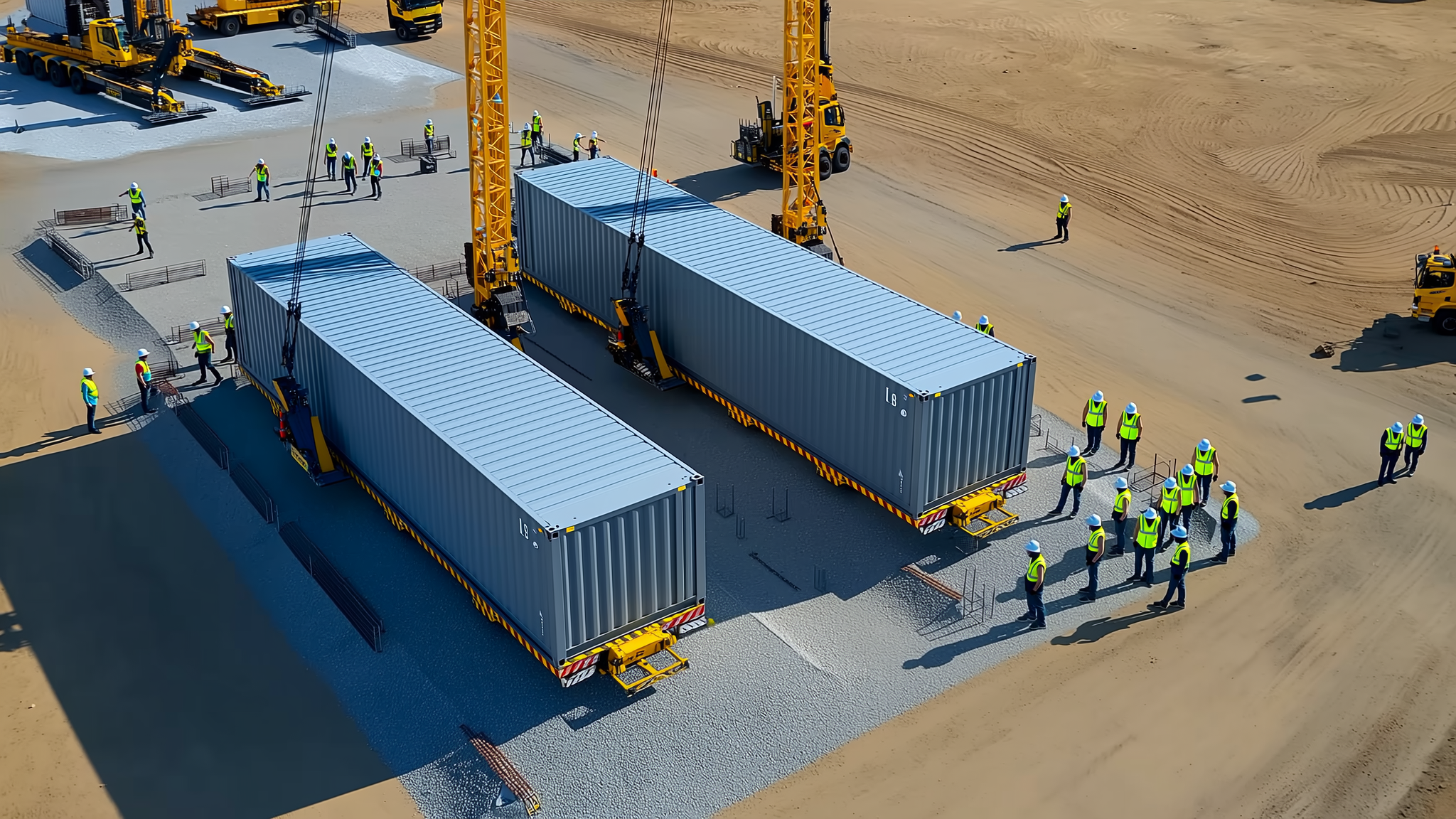
For most of the data center era, deployment timeline was a project-management concern. It affected when a facility opened and how much interim financing it carried, but it did not change who won the business. In 2026 that has flipped. When capacity is spoken for before it is built, the timeline is no longer about when you open. It is about whether the demand you were building for is still available when you get there. Speed has moved from an operational number to a competitive one, and the operators who understand that are the ones capturing the tenants.
The Two Clocks
Modular deployment is often described as if the building were the schedule. A traditional ground-up build takes 18 to 36 months. Stated that way, the gap looks like a construction-speed story, faster factory, faster install. It is not, or at least not mainly. The real gap is about which parts of the timeline run in parallel and which run in series.
The long pole in any data center build is not the building, it is the electrical path. Large power transformers now carry lead times around 128 weeks, roughly two and a half years. Generator step-up units run 90 to 144 weeks, and medium-voltage switchgear 36 to 60 weeks. Those are the items that actually set the floor on when a site can energize. A traditional build runs its site work, its construction, and its long-lead electrical procurement largely in sequence, so the transformer clock and the construction clock stack. A modular approach parallelizes: the factory build of the compute and mechanical modules runs at the same time as site preparation and the long-lead electrical procurement, so the clocks overlap instead of adding. That overlap, not raw construction speed, is where the months come from.
The Number That Matters
The comparison that matters is not a short factory advertisement against 18 to 36 months of ground-up work. It is a parallelization comparison. The 128-week transformer lead time sets the floor either way. A modular build gains time by running the factory clock alongside the electrical clock instead of after it.
Where the Slippage Concentrates
The timeline problem is worse than the averages suggest, because the averages assume plans hold. They do not. Roughly 73 percent of AI infrastructure projects that start in Q2 slip past their initial timeline, according to McKinsey. That is not a small tail of troubled projects, it is most of them. And the slippage does not spread evenly across the schedule. It concentrates in the long-lead items, the transformers, the switchgear, the interconnect, not in the build itself.
This is the part that reframes the modular argument. The reason modular deployment holds its schedule better is not that factories never run late. It is that the failure mode of a traditional build, a long-lead electrical item arriving after everything else was ready, is exactly the failure mode that parallelization is designed to absorb. When the transformer procurement runs alongside the module build rather than gating it, a delay in one does not automatically push the other. The schedule holds up better because the critical path is shorter and the dependencies are decoupled.
The Demand-Capture Argument
Now put the timeline against the market it is competing in. Data center vacancy in the primary markets is around 1 percent, and capacity is running 81.5 percent preleased before it is delivered. Read those two numbers together and the implication is stark: there is almost no available inventory, and the inventory that is coming is mostly already committed to tenants who signed before the concrete was poured.
In that environment, the tenant does not wait for the slow operator. Demand is captured by whoever can credibly promise energized capacity on the tenant's timeline, and in a preleased market that timeline is short. An operator who can be live in months can bid on off-take that an 18-to-36-month builder cannot honestly compete for, because by the time the slow build delivers, that demand is gone, locked into someone else's facility. Deployment speed is not a nice-to-have that improves margin at the edges. In a supply-constrained, preleased market, it is the mechanism by which an operator reaches demand at all.
Why Speed Is Now a Competitive Axis
- Vacancy near 1 percent means there is almost no standing inventory to lease.
- Capacity 81.5 percent preleased means new supply is committed before delivery, to whoever could promise the timeline.
- An operator who can energize once the long-lead electrical path is already secured can bid on off-take a multi-year builder cannot reach, because the demand does not survive an 18-to-36-month wait.
The Caveat That Separates Real Speed From a Sales Line
Speed only counts if the long-lead items were secured up front. This is the honest limit of the modular argument, and skipping it turns a real advantage into a claim that does not survive contact with a procurement schedule. A fast factory sitting on top of an unsecured transformer order is still on the slow clock. Any short deployment figure assumes the electrical long-lead procurement started early enough to land when the modules do. If it did not, the parallelization never happened, and the modular build inherits the same 128-week transformer wait as everyone else.
That is why deployment speed is downstream of discipline, not a substitute for it. The operators who actually hit the fast timeline are the ones who treated the long-lead electrical path as a day-one commitment, placed those orders before the site was even fully designed, and used the modular approach to run everything else alongside that clock. The ones who did not, who assumed the factory speed would cover for a late transformer order, discover that the factory was never the constraint. The constraint was always the electrical path, and speed is only real when that path was secured before the build began.
The 2026 Read
For the operators who have already cleared the two hard filters of this market, the credit to sign the tenants and the power to serve them, the next axis of competition is time. The supply crunch is not easing, vacancy is not loosening, and preleasing is not slowing down. In that market, the operator who can turn a secured power position into energized, tenant-ready capacity in months rather than years captures demand that the slower operators structurally cannot reach.
Deployment speed has become the primary axis of competition for the operators who already cleared the credit and power bars. It was always an advantage. In a preleased, sub-1-percent-vacancy market, it has become the difference between reaching the demand and watching it get committed to someone faster. The 2026 timelines do not suggest speed is becoming decisive at some point in the future. They suggest it already has.
Is Your Timeline Actually Secured?
The fast deployment number is only real if the long-lead electrical path was locked in first. Check your own readiness against the items that actually set the floor on delivery.
Open the AI Readiness ChecklistFurther reading
- 128-Week Transformer Lead Times - why the electrical path, not the build, sets the floor on delivery.
- 1% Vacancy, 81% Preleased: where midmarket compute actually deploys in a supply-constrained market.