Stargate, DeepSeek, and the 2026 AI Infrastructure Reality Check
$500 billion Stargate vs $6 million DeepSeek: what these extremes reveal about AI infrastructure strategy in 2026.

Executive Summary
Within 72 hours of each other, two announcements redefined AI infrastructure priorities for the next decade. The Stargate Project announced $500 billion in capital deployment for massive-scale data centers. DeepSeek released technical details showing they achieved frontier model performance for under $6 million in compute costs.
This article examines what these extremes reveal about infrastructure strategy, deployment models, and the critical decision framework for organizations navigating 2026 AI deployment decisions.
The Infrastructure Paradox
The infrastructure market is experiencing simultaneous divergence and convergence. Divergence in scale: $500B hyperscale initiatives versus $6M algorithmic efficiency achievements. Convergence in outcome: both represent valid paths to production AI capability.
For infrastructure leaders making 2026 deployment decisions, this creates both opportunity and confusion. The question is not "which approach is correct" but rather "which deployment model aligns with our organizational constraints, timeline requirements, and capital availability."
Stargate: The Hyperscale Thesis
The Stargate Project represents the continuation of hyperscale infrastructure economics. The announced $500 billion investment over four years is projected to deliver multi-gigawatt operational data center capacity by 2029.
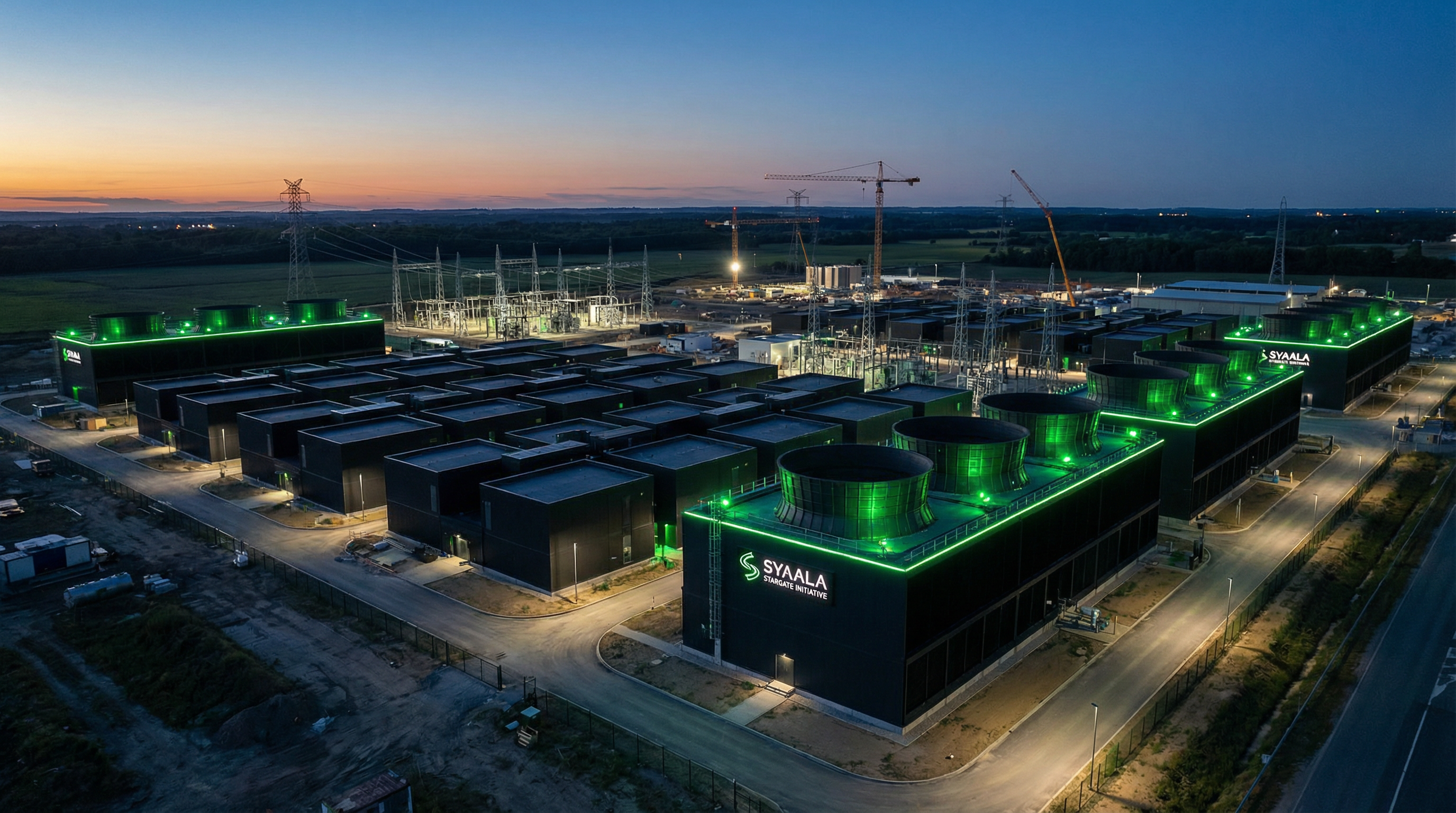
Stargate deployment economics:
- Capital deployment timeline: 4-year phased buildout (2026-2029)
- Expected capacity: Multi-gigawatt operational infrastructure (DCD analysis)
- GPU deployment: Estimated 1M+ H100/H200 equivalent GPUs (Syaala projection based on power capacity)
- Power infrastructure cost: Est. $150-250B (40-50% of total budget, based on Uptime Institute cost modeling)
- Time to first operational capacity: 24-36 months minimum
The hyperscale approach optimizes for maximum computational capacity with economies of scale achieved through massive capital deployment. The thesis: sufficient compute capacity eliminates algorithmic constraints, enabling brute-force approaches to model training and inference.
Strategic implication: Organizations pursuing Stargate-scale deployments are making a 4-7 year infrastructure commitment with total cost of ownership exceeding initial capital by 2-3x when operational expenses are included.
DeepSeek: The Efficiency Counter-Thesis
DeepSeek's announcement represents the algorithmic efficiency approach: achieving frontier model performance with $5.576 million in compute costs (per their technical report). This represents approximately 99% cost reduction compared to equivalent-capability hyperscale training runs.
DeepSeek efficiency metrics (from technical report):
- Total training cost: $5.576M for frontier-level performance (confirmed by DeepSeek)
- GPU requirement: 2,048 H800 GPUs (confirmed; vs 10,000+ for equivalent hyperscale approaches)
- Training timeline: Estimated 55-60 days for full training run
- Algorithmic innovations: Multi-head latent attention, mixture-of-experts architecture
- Infrastructure requirement: Deployable on colocation or modular infrastructure (vs hyperscale-only)
The efficiency approach optimizes for algorithmic innovation over raw compute capacity. The thesis: intelligent architecture design and training methodology can achieve equivalent outcomes with 80-99% less infrastructure investment.
Strategic implication: Organizations pursuing efficiency-first approaches can achieve production AI capability with 3-4 month deployment timelines and capital requirements 100-1000x lower than hyperscale alternatives.
Calculate Your Infrastructure ROI
Compare deployment models with our TCO calculator. Model hyperscale vs efficiency-optimized infrastructure costs over 3-year operational cycles.
The Four Infrastructure Archetypes
Between Stargate's hyperscale approach and DeepSeek's efficiency model exist four distinct infrastructure deployment archetypes. Each represents a valid path to production capability depending on organizational constraints.
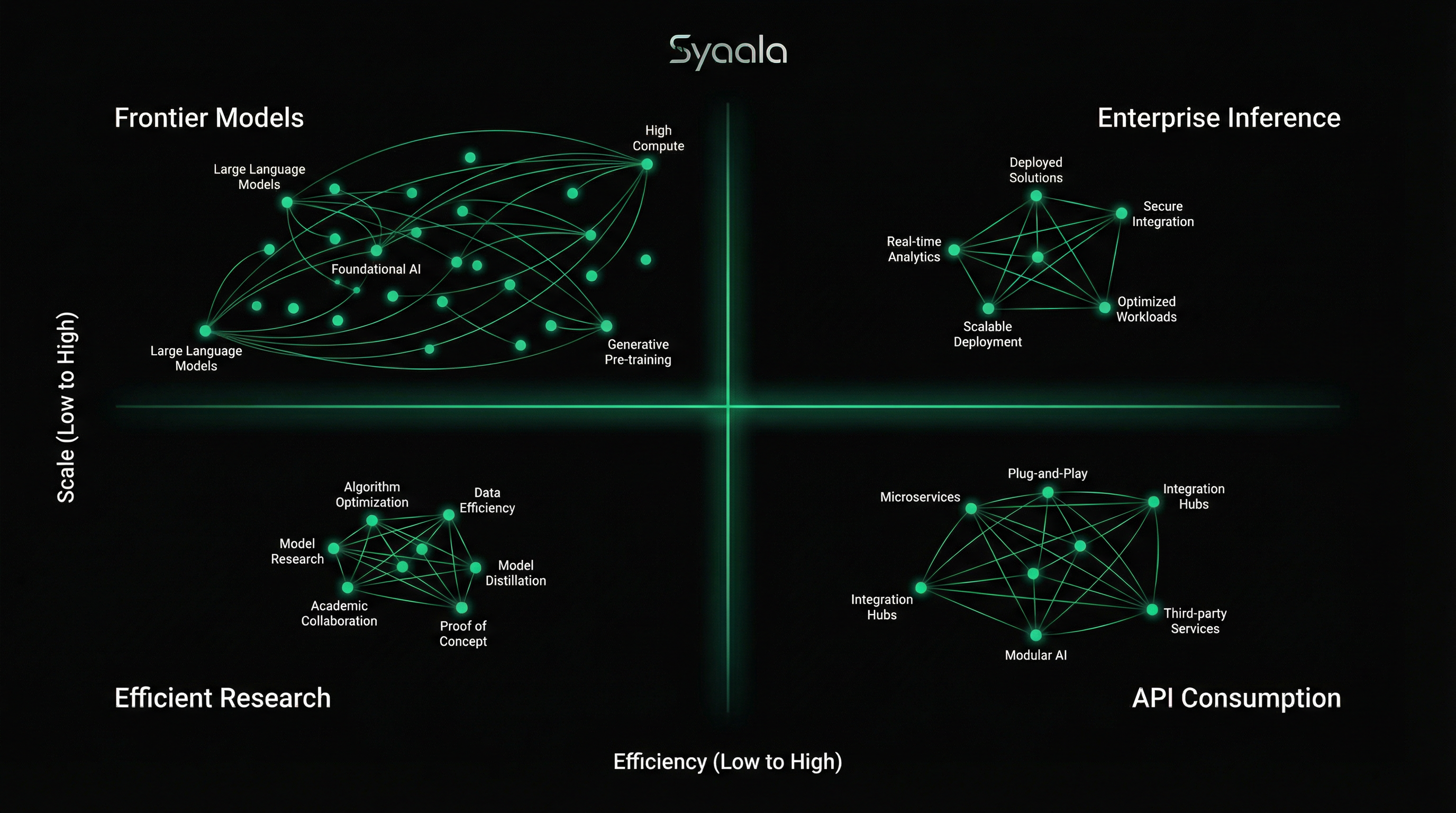
Archetype 1: Hyperscale Build
| Capital requirement: | $500M - $100B+ |
| Timeline to production: | 24-48 months |
| Optimal for: | Model training at scale, hyperscaler economics, multi-tenant cloud services |
| Constraint: | Massive capital requirement, long deployment cycle, power availability risk |
| Example: | Stargate Project, Microsoft Azure AI infrastructure, Meta AI Research Cluster |
Archetype 2: Efficiency-Optimized Colocation
| Capital requirement: | $5M - $50M |
| Timeline to production: | 90-180 days |
| Optimal for: | DeepSeek-style algorithmic efficiency, inference optimization, targeted model training |
| Constraint: | Requires sophisticated ML engineering, limited to current-gen facilities, tier-1 market pricing |
| Example: | DeepSeek training infrastructure, Anthropic inference clusters, Cohere production deployments |
Archetype 3: Modular Rapid Deployment
| Capital requirement: | $20M - $150M |
| Timeline to production: | 3-4 months PO-to-live (fastest path to owned infrastructure) |
| Optimal for: | Organizations requiring infrastructure ownership without traditional build timeline |
| Constraint: | Higher CapEx than colocation, limited to 10-50MW scale per deployment, requires power availability |
| Example: | Syaala modular deployments, enterprise AI infrastructure, regional cloud providers |
Archetype 4: Hybrid Multi-Deployment
| Capital requirement: | $50M - $500M+ |
| Timeline to production: | 3-4 months for first capacity, phased expansion over 12-24 months |
| Optimal for: | Organizations requiring immediate capacity with long-term hyperscale ambitions |
| Constraint: | Complex operational management, higher total cost than pure-play approaches |
| Example: | Immediate colocation + modular buildout, colocation + traditional data center expansion |
Market Dynamics and Strategic Implications
The simultaneous validity of $500B hyperscale and $6M efficiency approaches creates a bifurcated market with distinct competitive dynamics.

2026 market dynamics:
- Hyperscale consolidation: 3-5 players will control 80% of large-scale AI training capacity by 2028
- Efficiency proliferation: 50-100 organizations will deploy DeepSeek-scale infrastructure (2K-10K GPU clusters)
- Modular growth: 20-30 rapid deployments for organizations requiring infrastructure ownership without traditional timeline
- Capital allocation shift: Efficiency-first approaches will capture 40-60% of enterprise AI infrastructure spend
- Timeline pressure: Organizations with Q1 2026 decision windows have 3-4 month opportunity for optimal deployment economics
The strategic implication: infrastructure deployment is no longer a binary hyperscale-or-nothing decision. Organizations can achieve production AI capability at multiple capital scales with deployment timelines ranging from 3-4 months to 48 months.
The critical variable is alignment: matching infrastructure archetype to organizational constraints (capital availability, timeline requirements, operational capability, ownership preferences).
Download the AI Infrastructure Decision Framework
47-point infrastructure readiness checklist with deployment model decision criteria. Includes capital requirement modeling, timeline assessment, and operational readiness verification.
Strategic Decision Criteria
Selecting between infrastructure archetypes requires evaluation across six decision dimensions. Organizations should assess constraints and requirements in this order:
1. Timeline Requirements
Question: When do you need operational AI infrastructure?
- • 3-4 months: Colocation or modular deployment only (hyperscale not viable)
- • 6-12 months: Modular deployment optimal (avoid traditional build risk)
- • 12-24 months: Hybrid multi-deployment or traditional build consideration
- • 24+ months: All options viable, decision driven by other criteria
2. Capital Availability
Question: What infrastructure capital can be deployed over 24 months?
- • $5M - $50M: Efficiency-optimized colocation (DeepSeek model)
- • $20M - $150M: Modular rapid deployment
- • $50M - $500M: Hybrid multi-deployment or traditional build
- • $500M+: Hyperscale build viable (Stargate model)
3. Ownership Requirements
Question: Do you require infrastructure ownership or is colocation acceptable?
- • Ownership required: Modular or traditional build (colocation excluded)
- • Ownership preferred but flexible: Hybrid approach (immediate colocation + future owned infrastructure)
- • Ownership neutral: Evaluate purely on economics and timeline (colocation often optimal)
4. Scale Requirements
Question: What computational capacity do you need at maturity?
- • 1-10MW: Colocation or small modular deployment
- • 10-50MW: Modular deployment optimal
- • 50-200MW: Traditional build or phased modular
- • 200MW+: Hyperscale build (multi-year deployment)
5. Geographic Requirements
Question: Do you have specific geographic or latency requirements?
- • Tier-1 markets (Northern Virginia, Dallas, etc.): Colocation readily available
- • Secondary markets: Modular deployment often required (limited colocation options)
- • International or multi-region: Hybrid approach (colocation where available, modular elsewhere)
6. Operational Capability
Question: What infrastructure operational capability does your organization have?
- • Limited infrastructure team: Colocation preferred (operational burden on provider)
- • Experienced infrastructure team: Modular or traditional build viable
- • Hyperscale operational experience: All options viable, decision driven by other criteria
Conclusion: Infrastructure Pluralism
The 2026 AI infrastructure market is defined by pluralism: multiple valid paths to production capability at radically different capital scales and timelines. Stargate and DeepSeek represent the extremes, but most organizations will deploy somewhere between these poles.
The strategic imperative: evaluate your organizational constraints honestly, map them to infrastructure archetypes, and execute deployment before market dynamics shift. The Q1 2026 decision window remains open, but closes rapidly as colocation inventory depletes and modular manufacturing capacity fills.
Organizations that align infrastructure deployment to actual constraints (versus aspirational hyperscale visions) will achieve production AI capability faster and more capital-efficiently than those pursuing deployment models mismatched to their organizational reality.
The infrastructure decision is not "what does Google do" but rather "what deployment model matches our specific constraints and enables our specific AI objectives." Answer that question correctly, and the path to production becomes clear.
Ready to Evaluate Your Infrastructure Options?
Syaala engineers modular AI infrastructure for 3-4 month deployment, not 18 months -- the rapid deployment path between efficiency-optimized colocation and multi-year hyperscale builds.
References and Sources
About Syaala
Syaala engineers modular AI infrastructure for 3-4 month deployment, not 18 months -- the rapid deployment path for organizations that need infrastructure ownership without traditional build timelines. Factory-configured systems designed for the 1-50 MW segment with predictable economics.
Contact us to evaluate modular deployment for your AI infrastructure requirements: syaala.com/contact