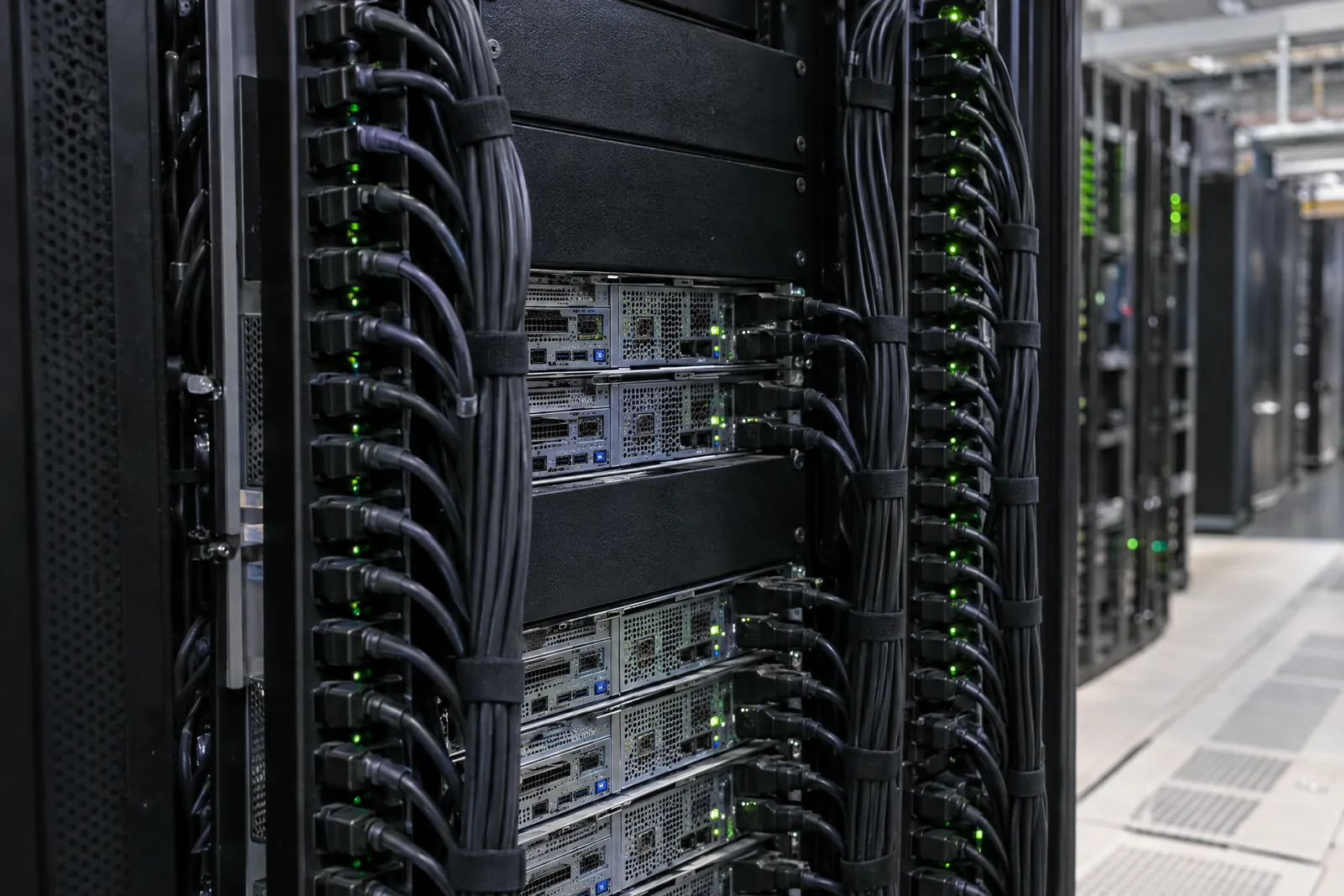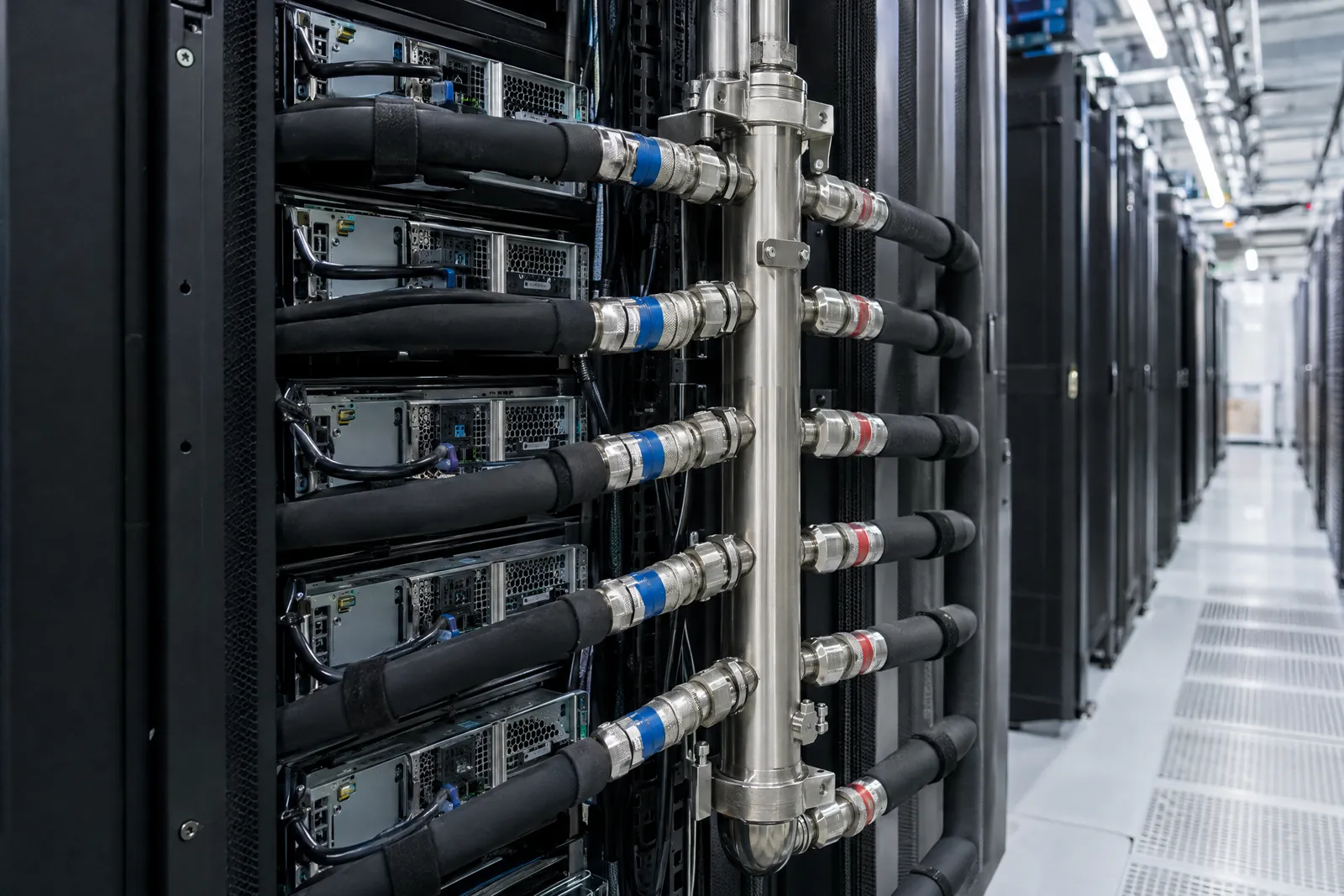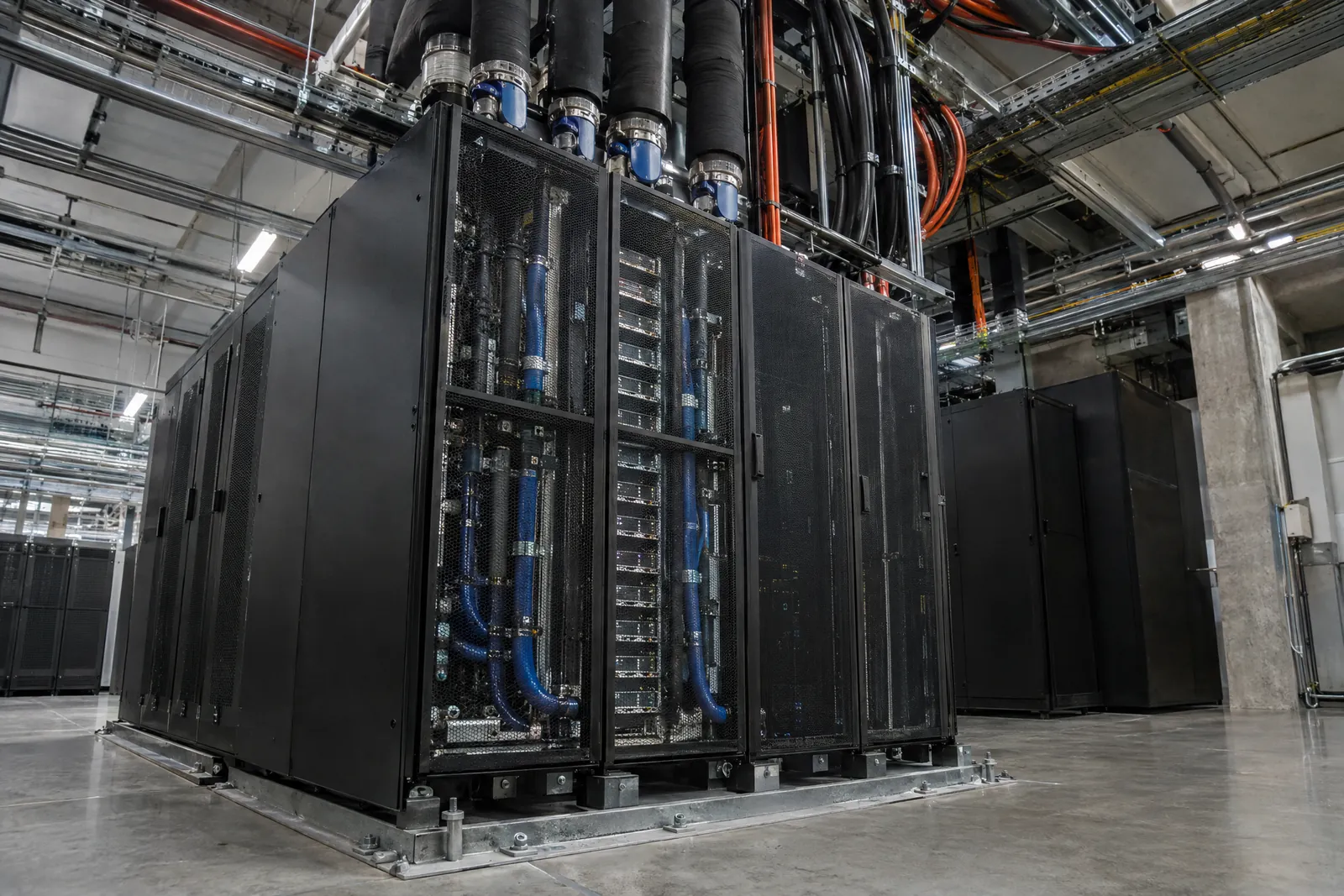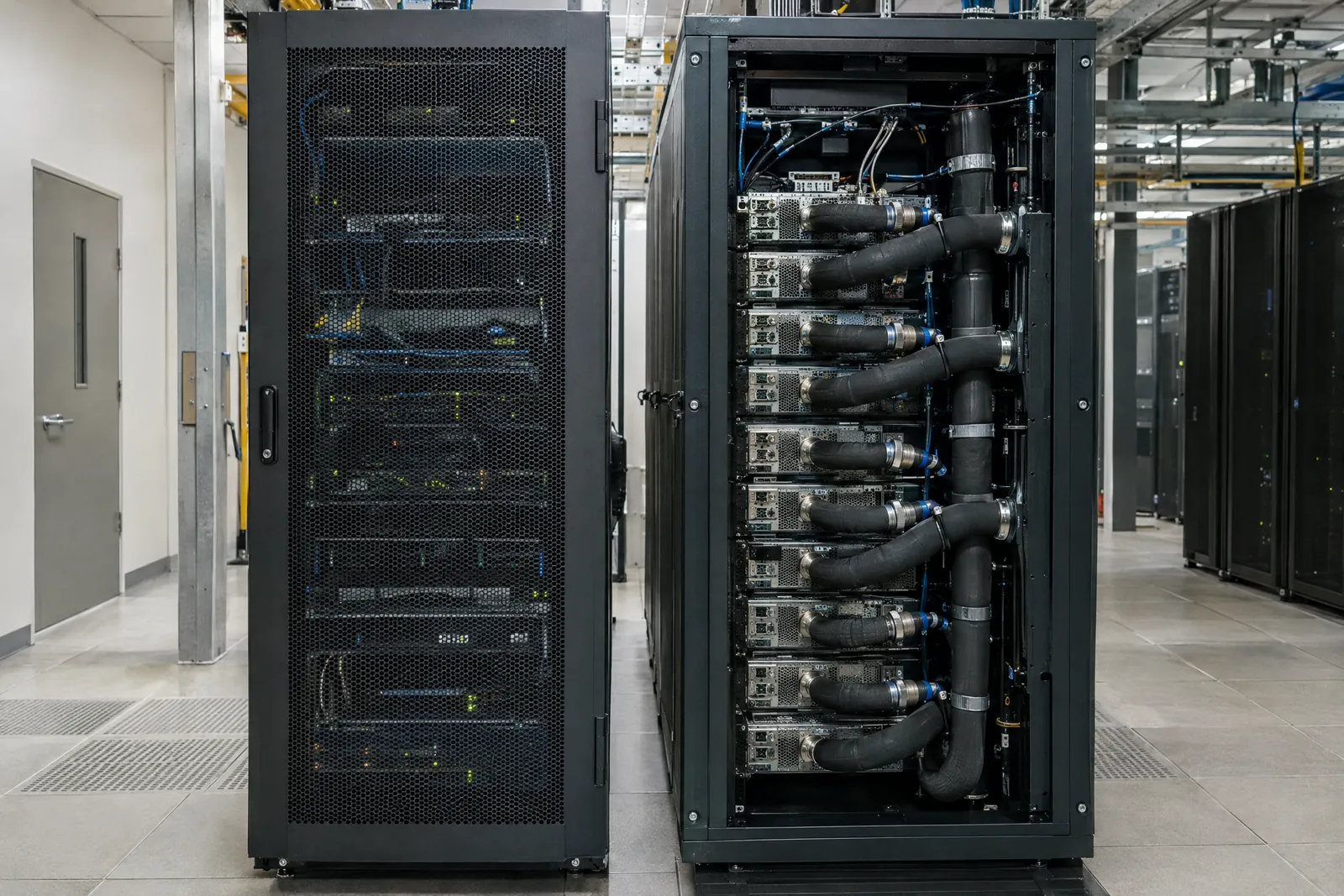
NVIDIA Blackwell GPUs generate up to 1,000 watts per chip, over three times more heat than GPUs from seven years earlier. Traditional air cooling physically cannot dissipate heat at these densities. Above 50 to 100 kW per rack, liquid cooling is not optional. It is physics.
- Per Blackwell chip
- 1,000 W
- Current rack density
- 132 kW
- Expected next generation
- 240 kW
- Air cooling limit
- 50 to 100 kW
Sources: Lombard Odier, Tom's Hardware, Data Center Dynamics.
The Power Density Evolution
Understanding how we got here helps put the infrastructure challenge in context. In less than a decade, rack power density has increased nearly 10x for AI workloads.
| Year | Rack density | Workload |
|---|---|---|
| 2017 | 15 kW per rack | Standard enterprise workloads |
| 2024 | 40 to 60 kW per rack | AI workloads with H100 GPUs |
| 2025 | 132 kW per rack | NVIDIA GB200 NVL72 systems |
| 2026 | 240 kW per rack | Next-generation systems (expected) |
Why Air Cooling Fails
Air has fundamental limitations as a heat transfer medium. Its thermal conductivity is roughly 25 times lower than water. At densities above 50 to 100 kW per rack, you cannot move enough air through the system to dissipate heat effectively.
The implications are straightforward: any facility planning to deploy current-generation or next-generation GPU infrastructure must plan for liquid cooling. This is not a feature preference. It is a physical requirement.
Liquid Cooling Approaches
Three primary approaches address high-density cooling requirements:
Rear-Door Heat Exchangers (RDHx)
Capacity: 30 to 50 kW per rack.
Retrofit solution for existing facilities. Captures heat at the rack exhaust. Suitable for moderate density increases but insufficient for current GPU requirements.
Direct-to-Chip Liquid Cooling
Capacity: 100 to 200 kW per rack and above.
Cold plates directly attached to CPU and GPU surfaces. Most efficient heat capture at the source. Required for high-density AI workloads. This is what NVIDIA recommends for GB200 deployments.
Immersion Cooling
Capacity: 200 kW per rack and above.
Servers fully submerged in dielectric fluid. Highest density support possible. Requires significant operational changes and specialized equipment.
What This Means for Planning
If you are planning AI infrastructure for 2026 to 2027, cooling strategy is not optional:
| GPU generation | Rack density | Cooling requirement |
|---|---|---|
| H100 and H200 | 40 to 80 kW | High-density air may work |
| GB200 (Blackwell) | 132 kW | Liquid cooling required |
| Next generation (2026 and later) | 240 kW | Advanced liquid cooling mandatory |